
Autumn Season in India Essay: Model, 10 Lines, and 200-Word Version
Autumn season in India essay: annotated model, 10 lines, and a 200-word version for class 6 to 8, plus its months, festivals, and why autumn is the best season.
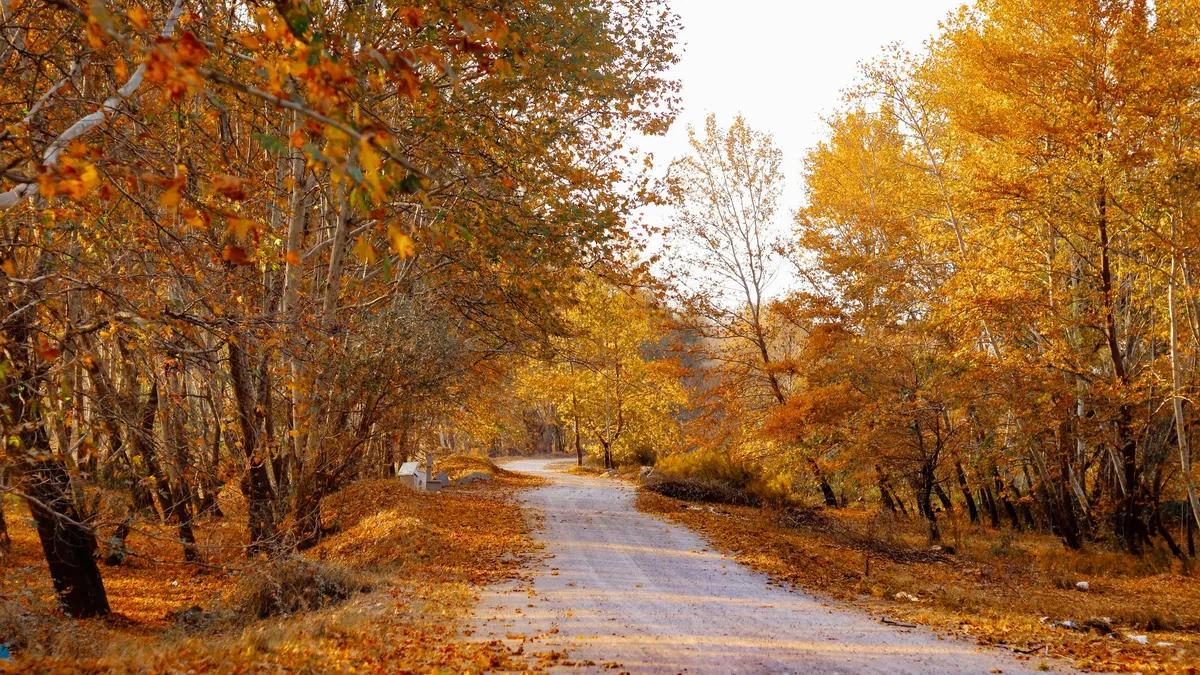
At a glance
- Format
- Annotated example
- Reading time
- 10 min
- Sections
- 7
- Last checked
- October 2, 2026
The short version
- A full model essay on autumn in India, broken down move by move with margin notes.
- A 200-word autumn season essay in English for class 6 to 8, and 10 lines for younger students.
- The months, weather, crops, and festivals of the Indian autumn, checked so you can use them with confidence.
This is an annotated example. Read it to see why the writing works, then write your own in your own words. Submitting it is plagiarism, and it will be caught.
Ask a class to write about a season and most essays land in the same soft place. They open with a dictionary line, list the six seasons, and then repeat that autumn is “very beautiful” three times without ever showing a single thing. The reader learns nothing they did not already know.
A strong descriptive essay does the opposite. It stands in one place, looks hard, and reports what the senses pick up. It trusts detail to carry the feeling instead of naming the feeling and hoping. The model below does that for autumn in India, the season Sanskrit tradition calls Sharad Ritu. Read it once for pleasure, then read it again with the margin notes to see the machinery underneath. After the model you will find the facts behind the season, a short 200-word version for class 6 to 8, and 10 lines for younger students.
The Essay: Autumn Season in India
The rains loosen their grip slowly. For weeks the monsoon has hung over the plains, gray and heavy, and then one morning the sky simply lifts. The clouds thin into long white streaks, the air dries, and the light turns sharp enough to throw clean shadows again. This is how autumn announces itself in northern India, not with a chill but with clarity. People call it Sharad Ritu, and it arrives as relief.
The fields tell the story first. Rice paddies that stood flooded and green all through the rains begin to ripen toward gold. Farmers walk the bunds at dawn, checking the heads of grain, and the whole landscape leans toward harvest. In the villages the talk turns to threshing floors and to the price of the crop. Autumn in India is not an idle, decorative season. It is the season when the year’s hard work in the mud finally comes back as food.
Mornings arrive cool now. There is dew on the grass that was not there in September, and the first cup of tea steams a little longer in the hand. By midday the sun is still warm, but it has lost the wet, suffocating weight of summer. In the evenings a light shawl comes out of the cupboard. The temperature does not crash the way it might in a colder country. It eases, degree by degree, and the body relaxes into it.
Then the festivals begin, and the season fills with color and noise. Navratri opens it, nine nights of dance and fasting, with the garba turning in courtyards until late. In Bengal the streets swell for Durga Puja, when huge painted idols of the goddess are carried through crowds and set under lights that turn ordinary lanes into galleries. Dussehra follows, and effigies of Ravana burn against the dark sky while children press to the front to watch. The cooking oil, the marigolds, the drums, all of it belongs to this stretch of the year.
As the festival nights pass, the whole country begins to lean toward Diwali. Shops stay open late. Rows of small clay lamps appear on window ledges and stair rails, and by the end of the season those lamps and strings of light will cover entire streets. There is a particular smell to these weeks, sweets frying in ghee, fresh marigold garlands, and a faint smokiness in the cooling evening air. Autumn in India is the bridge between the exhausted quiet after the rains and the bright, crowded warmth of Diwali.
What I like most about this season is its balance. It is neither the harsh heat of summer nor the deep cold of winter. It is a pause with work in it, the fields being cut, the lamps being lit, the family gathering for one festival after another. When people say India has six seasons, they mean this kind of distinction, that Sharad has its own character and cannot be folded into “autumn” borrowed from a colder map. It comes, it feeds the country, it lights it, and then it hands the year quietly to winter.
Is There an Autumn Season in India? Which Months It Covers
Indian tradition divides the year into six seasons, or ritus: Vasanta (spring), Grishma (summer), Varsha (monsoon), Sharad (autumn), Hemanta (early winter), and Shishira (late winter). Sharad falls in the lunar months of Ashwin and Kartik, which is roughly mid-September to mid-November on the calendar most schools use. The India Meteorological Department does not use the word autumn at all. It divides the year into winter (January and February), the pre-monsoon or hot season (March to May), the southwest monsoon (June to September), and the post-monsoon season (October to December). What a school essay calls autumn is the post-monsoon stretch, the weeks when the rains retreat and the cool season has not yet settled in.
That retreat is uneven, and an honest essay can say so. The monsoon starts withdrawing from northwest India around the middle of September and has usually left most of the country by mid-October. In Delhi, Lucknow, or Patna, this means clear skies, falling humidity, and daytime temperatures that slide from the low thirties Celsius in early October to the mid-twenties by late November. Across the south, the picture is different. Tamil Nadu and coastal Andhra Pradesh get their heaviest rain from the northeast monsoon between October and December, and the Bay of Bengal produces its most dangerous cyclones in these same months. Kerala stays warm and humid. So “autumn season in India” really means autumn in the northern and central plains, and a student who writes from Chennai or Kochi should describe the season as it actually arrives there.
One more correction worth making. In most of India the leaves do not turn red and fall, which is why the American word “fall” fits badly. Trees here mostly shed in late winter and spring, before the heat. The Indian autumn is a season of light, harvest, and festivals, not of bare branches.
Weather, Crops, and Festivals in the Autumn Season in India
Weather. After the last monsoon showers, humidity drops and the sky clears to a hard, bright blue. The first weeks of October can still feel warm and sticky, a spell people in the north call October heat. By November, mornings turn misty and evenings call for a shawl. In the Indo-Gangetic plain the still air of late October and November also traps smoke from crop stubble burning and Diwali fireworks, and the air quality in cities like Delhi usually becomes the worst of the year. An essay that mentions the haze alongside the lamps is more truthful than one that pretends the season is flawless.
Crops. Autumn is the kharif harvest. Rice, maize, cotton, soybean, and groundnut sown with the monsoon come in between late September and November. At the same time farmers prepare and sow the rabi crops, wheat, mustard, and gram, which will grow through the winter. Markets fill with the new rice, and in many villages the harvest and the festivals are the same event.
Festivals. Because the Hindu festival calendar is lunar, the dates move each year, but the sequence is steady. Navratri and Durga Puja open the season in late September or October. Dussehra, also called Vijayadashami, ends the nine nights. Bathukamma, the flower festival of Telangana, runs alongside Navratri. Karwa Chauth follows, then Diwali in October or November, then Bhai Dooj and, in Bihar and eastern Uttar Pradesh, Chhath Puja on the riverbanks about six days after Diwali. Assam marks Kati Bihu in mid-October, and Guru Nanak Jayanti falls on the full moon of Kartik in November. Ganesh Chaturthi and Onam come a little earlier, at the tail of the monsoon in August or September, so mention them only if your essay starts the season early.
Autumn Season Essay for Class 6 to 8 in English (About 200 Words)
Autumn is the season that comes after the rainy season in India. It usually lasts from the end of September to November. During this time the monsoon clouds go away and the sky becomes clear and blue. The days are warm but not hot, and the mornings and evenings are cool and pleasant.
Autumn is a busy time for farmers. The rice that was planted during the rains turns golden and is ready to be cut. Farmers harvest the crops and sell them in the market. After the harvest they prepare the fields for wheat and other winter crops.
Autumn is also the season of festivals. Durga Puja and Navratri are celebrated with music and dance. On Dussehra, big effigies of Ravana are burned to show that good wins over evil. Then comes Diwali, the festival of lights. People clean and decorate their homes, light clay lamps, and share sweets with their neighbors.
I like autumn because the weather is neither too hot nor too cold. The air smells of marigold flowers and fresh sweets, and the streets shine with lights in the evening. It is the happiest season of the year for me.
Autumn Season in India Essay: 10 Lines for Class 4 to 6
For class 4 to 6 assignments that ask for 10 lines, use these as a pattern and change the details to match your own town and your own family’s festivals.
- Autumn is the season that comes after the monsoon in India.
- It usually lasts from the end of September to November.
- In Sanskrit this season is called Sharad Ritu.
- The sky becomes clear and blue, and the rain clouds disappear.
- The days are warm, and the mornings and evenings are cool.
- Farmers harvest rice, maize, and other crops in this season.
- Many festivals come in autumn, such as Durga Puja, Dussehra, and Diwali.
- People light clay lamps and decorate their homes for Diwali.
- The markets are full of marigold flowers and sweets.
- Autumn is my favorite season because the weather is pleasant and everyone is happy.
Why Autumn Is the Best Season in India, and Why a Fall Essay Differs
Students sometimes search for an “essay on fall season” and paste in details that belong to a different continent. If your assignment is about fall in the United States or Canada, the honest material is different: maple and oak leaves turning red and yellow, days growing noticeably shorter, the first frost, pumpkins, Halloween at the end of October, and Thanksgiving in November. If your assignment is about autumn in India, the leaves mostly stay green, the big change is the sky clearing after the monsoon, and the heart of the season is the harvest and the festival calendar. Both are real autumns. The mistake is to describe one while living in the other. Write the season you can see from your own window.
How to Use This Model
Study the moves, not the sentences. Notice how each paragraph of the model does one job: the sky changing, the harvest, the cooling air, the festivals, the run toward Diwali, and then a short reflection. Notice how often the writing reaches for a real thing you can see, hear, or smell instead of a word like beautiful or pleasant. If you want the method behind that habit spelled out, our guide to how to write a descriptive essay walks through it with more examples, and the guide to writing an essay introduction shows how to open on a scene instead of a definition.
Now close this page and write your own. Stand somewhere you actually know, a rooftop, a courtyard, a bus window, and describe autumn as it reaches that spot. Use the festivals your family keeps, the food your kitchen makes, the light you have watched change. This essay is here to show you how the craft works. The observations in yours should be your own, and the words should come from your own memory, not from this screen.
What makes this essay work
- Anchor a season in a real place and a real moment, not a general definition.
- Lead with the senses: light, sound, smell, and temperature do the describing.
- Let structure follow the season's own movement from monsoon to festival to harvest.
- Close with a reflection that grows out of the details, not a summary of them.
Questions
Which month is the autumn season in India?
In the traditional six-season calendar, autumn (Sharad Ritu) runs through the lunar months of Ashwin and Kartik, roughly mid-September to mid-November. The India Meteorological Department does not use the word autumn; it calls October to December the post-monsoon season. Most school essays treat the end of September or October through November as autumn.
Is there an autumn season in India?
Yes, but it looks different from autumn in colder countries. In the northern and central plains, autumn is the stretch after the monsoon retreats: clear skies, falling humidity, cool mornings, and the rice harvest. The leaves mostly stay green, since Indian trees shed in late winter and spring. In the far south, October to December brings the northeast monsoon instead, so write the season as it arrives where you live.
Which festivals are celebrated in the autumn season in India?
Navratri and Durga Puja open the season, followed by Dussehra, Bathukamma in Telangana, Karwa Chauth, Diwali, Bhai Dooj, Chhath Puja in Bihar and eastern Uttar Pradesh, Kati Bihu in Assam, and Guru Nanak Jayanti on Kartik Purnima. Exact dates move each year because they follow the lunar calendar, so check the current year before you write.
How do I write an autumn season in India essay in 10 lines for class 6?
Give one clear fact or observation per line: when the season comes, what the sky and weather do, what farmers harvest, two or three festivals, one food or smell, and a closing line about why you like it. The 10 lines on this page show the pattern. Rewrite each one in your own words with details from your own town.
How do I write a 'why autumn is the best season' essay?
Argue from specifics, not adjectives. The model's closing paragraph makes the case through balance: the weather is neither the harsh heat of summer nor the deep cold of winter, the fields are being cut, the lamps are being lit, and one festival follows another. Pick three such reasons, give each a concrete image you have seen, and end on why that balance matters to you.
Can I copy this essay for my own assignment?
No. This is a model to study, not text to submit. Your school runs originality and AI-detection checks, and copied work fails them. Use it to see how the moves work, then write your own from your own observations, with the festivals your family keeps and the town you actually live in.