
A Stitch in Time Saves Nine: An Annotated Model Essay
A model expository essay explaining the proverb 'a stitch in time saves nine,' proved across health, study, and repair, annotated for structure.
At a glance
- Format
- Annotated example
- Reading time
- 6 min
- Sections
- 2
- Published
- July 17, 2026
The short version
- A model expository essay on the proverb, showing the idea explained and then proved across four areas of life.
- Annotations point out the craft moves so you can copy the technique, not the words.
- Includes a guide on how to study the model without submitting it.
This is an annotated example. Read it to see why the writing works, then write your own in your own words. Submitting it is plagiarism, and it will be caught.
Most proverb essays fail the same way. The writer states the saying, then spends four paragraphs saying it again in slightly different words: it is important to act early, we should not delay, small things become big things. By the end the reader has learned nothing the title did not already tell them. A strong proverb essay does two jobs instead. First it explains what the idea actually means, moving from the literal picture to the general principle. Then it proves that principle by testing it against real situations from different corners of life. The essay below does both, and the notes after key paragraphs point out how.
The Essay: A Stitch in Time Saves Nine
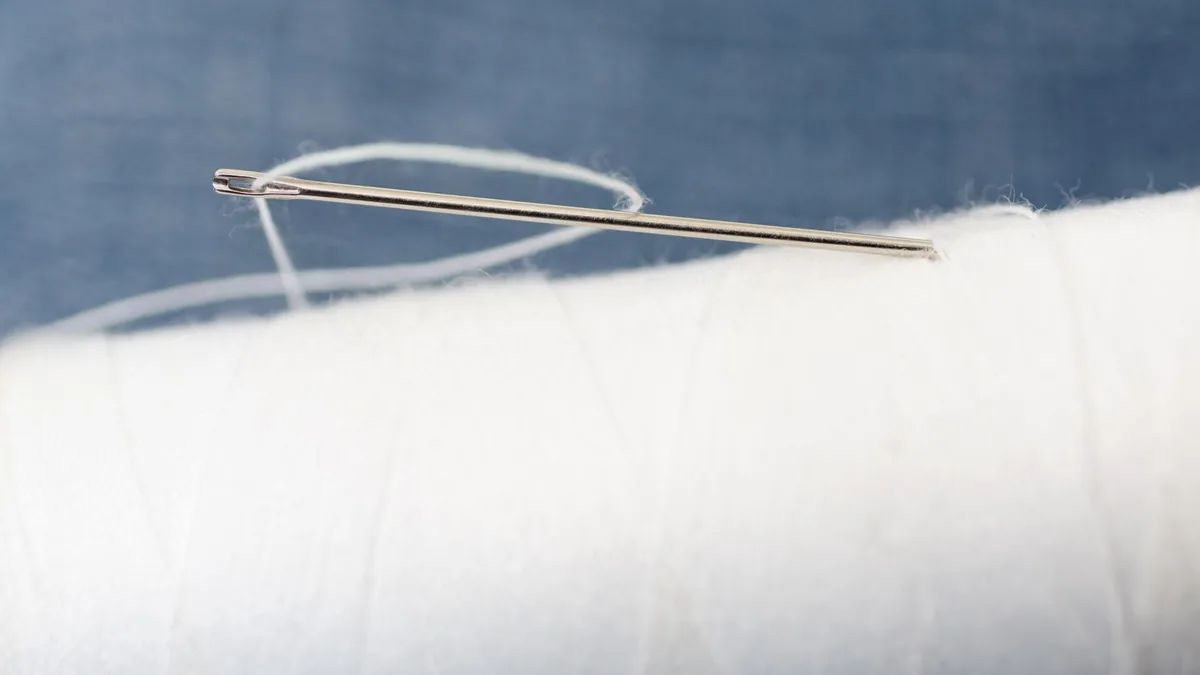
Picture a small tear in a shirt, no wider than a fingernail. Sewn shut with one stitch today, the shirt is saved. Left alone, the tear widens every time the fabric is pulled, until closing it takes nine stitches instead of one, and the shirt may be beyond saving. That is the literal scene behind the proverb, and it is worth holding onto, because the whole lesson lives inside it. One stitch now, or nine later. The saying takes that image of mending cloth and hands it to us as a rule for almost everything we do.
The real meaning has little to do with sewing. Problems, like tears, tend to grow when ignored. A difficulty that is small and cheap to fix today becomes large and costly tomorrow, and the longer we wait, the worse the ratio gets. The proverb is not simply telling us to work hard or to care. It is making a sharper claim: that early action is efficient action, and that delay does not keep a problem the same size but actively multiplies it.
Health shows the pattern most plainly. A tooth with a small cavity can be filled in twenty minutes. Ignored for a year, that cavity reaches the nerve, and the twenty minute filling becomes a root canal, a crown, and several return visits. The problem did not wait politely for us. It spread. The same is true of a strange ache we keep meaning to have checked, or a cough that never quite clears. The body rarely rewards delay, and the earliest version of a problem is almost always the cheapest one to treat.
Schoolwork tells the same story on a shorter clock. An essay assigned four weeks early is a light task if a student writes a paragraph every few days. Left until the final night, it becomes a panic of caffeine and half formed thoughts, and the grade shows it. Nothing about the assignment changed. Only the time left to do it well shrank, and with it every option the student once had. Starting early is the single stitch. The all nighter is the nine.
The idea reaches into things we own, too. A roof with one loose tile is a ten minute repair. Left through a season of rain, the water finds the gap, soaks the timber, and quietly rots a beam that costs thousands to replace. A car makes a faint new noise, and the driver turns up the radio; months later the small worn part has destroyed the expensive parts around it. Maintenance is the art of the early stitch, and people who seem lucky with their houses and cars are often just the ones who listen to small signals.
Relationships work by the same rule, though the tears are harder to see. A small resentment left unspoken does not dissolve. It hardens, colours the next conversation, and gathers company, until what could have been a five minute talk becomes a wall that took years to build and may never fully come down. The single honest sentence said early is the stitch. The long silence is what turns one problem into nine.
What ties these together is a single, slightly uncomfortable truth. The moment a problem is smallest is exactly the moment it is easiest to ignore, because it barely hurts yet. The tiny cavity is painless. The essay is not due for weeks. The noise is faint. So the proverb is really a warning against our own instinct to wait, and its wisdom is that the cost of acting early is almost always smaller than it looks, while the cost of waiting is almost always larger. Nine stitches are not a punishment. They are just what one neglected stitch grows into.
How to Use This Model
Read this to see the pattern, then close it and write your own. Notice the skeleton: literal image, then real meaning, then three or four examples from different areas of life, then a lesson that adds a fresh thought rather than repeating the saying. That skeleton is yours to reuse. The words and examples are not. Swap in a cavity you actually had, a deadline you actually missed, a small argument you wish you had handled sooner. Your teacher has read a hundred essays that just say the proverb five times, and your own concrete examples are exactly what will make yours stand out. Submitting this text would fail an originality check and teach you nothing. Studying how it moves will do the opposite.
What makes this essay work
- A proverb essay earns its length by explaining the idea once and then testing it against real situations, not by rephrasing the saying.
- Open with the literal image, then translate it into the general principle so the reader has both a picture and a rule.
- Use examples from different areas of life so the essay proves the idea is general, not a single lucky case.
- Close on the wider lesson and the cost of ignoring it, so the ending adds meaning instead of repeating the title.
Questions
Can I copy this essay for my own assignment?
No. This is a model to study, not text to submit. Your school runs originality and AI-detection checks, and copied work fails them. Study the moves, then write your own with your own examples.
How long should a proverb essay be?
Most school proverb essays land between 500 and 900 words, or three to five paragraphs. Check your assignment sheet first. The length matters less than the pattern: state the meaning, prove it with two or three examples, then draw the lesson.
Do I need real examples or can I make them up?
Invented but realistic examples are fine for a proverb essay unless the assignment asks for research. A small cavity that becomes a root canal, or a cracked phone screen left to spread, both work. What matters is that the example clearly shows a small problem growing into a large one.