
Essay on Plastic Pollution: An Annotated Model to Learn From
A model plastic pollution essay with margin notes that show why each paragraph works, from a sharp thesis to specific evidence and a strong close.
Annotated example — learn from it, don't copy it. We show you why the writing works so you can do it in your own words.
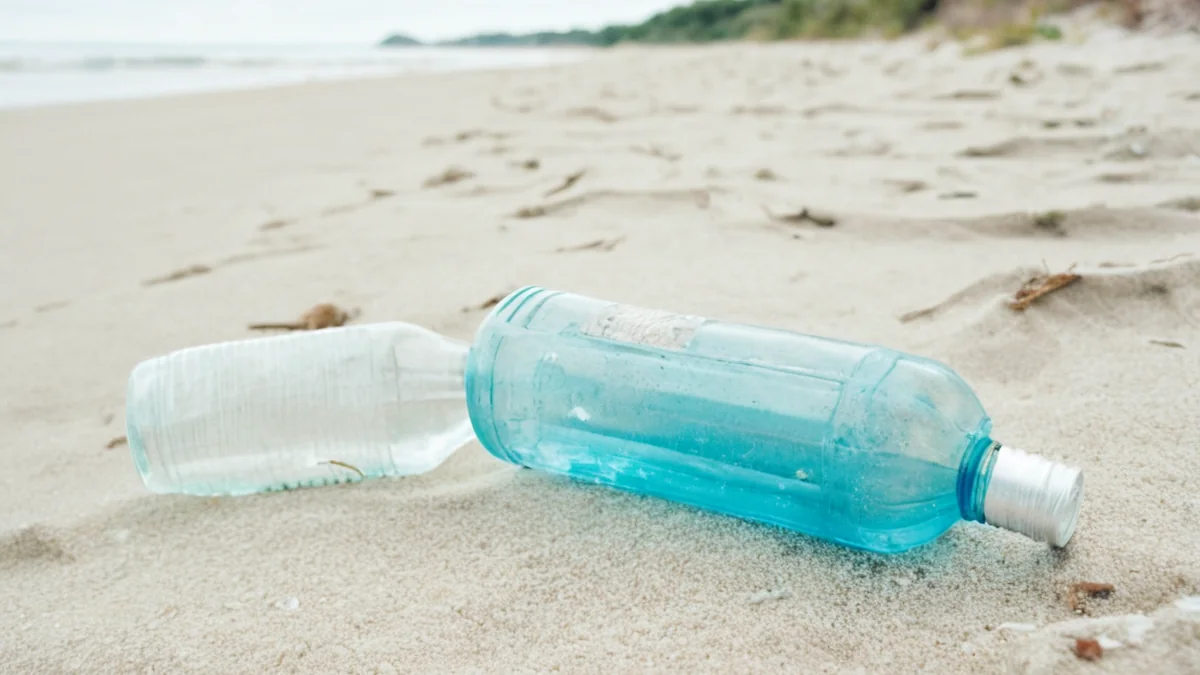
Below is a complete model essay on plastic pollution, marked up with notes that explain why each part works. Treat it as a worked example, the way you would study a solved math problem. Read it, notice the moves, then close the tab and build your own argument. This page is indexed and public, and your instructor almost certainly runs originality and AI-detection software, so copying any of it is a fast way to fail. The point here is the how, not the words.
Introduction
Every year, roughly 8 million tons of plastic slide off our coastlines and into the ocean, the weight of about 800 Eiffel Towers dumped into the sea. Plastic solved real problems when it arrived: it kept food fresh, made medical tools sterile and cheap, and lightened everything from cars to packaging. The trouble is that we built a disposable habit on a material designed to last centuries. Plastic pollution is not a mystery of nature or an unstoppable force. It is a design failure and a policy failure, which means it is something people made and something people can fix.
How much plastic, and where it goes
The scale is the first thing to grasp. Humans produce more than 300 million tons of plastic a year, and since the 1950s we have made around 6.3 billion tons of the stuff. Only about 9 percent of that has ever been recycled. The rest sits in landfills, drifts through waterways, or breaks into smaller and smaller fragments. Because most plastics do not biodegrade, they fragment instead, splitting into microplastics that have turned up in Arctic ice, in table salt, in rain, and in human blood. A material we use for nine minutes, in the case of an average grocery bag, can outlast the person who threw it away by four hundred years.
The damage runs through the whole chain
Plastic pollution does not stay in one place, and that is what makes it dangerous. In the ocean, seabirds and turtles mistake floating fragments for food and starve with full stomachs. An estimated 1.1 to 8.8 million tons of plastic enter the sea from coastal communities each year, and researchers project that by 2050 the ocean could hold more plastic by weight than fish. On land, buried plastics leach chemicals that lower soil fertility and clog drainage, which worsens flooding in cities that can least afford it. Microplastics then travel back up the food chain to our own plates. The problem is circular: what we discard returns to us through the water we drink and the fish we eat.
Why the easy answers fall short
The common response is to tell individuals to recycle more, and recycling matters. But the numbers make clear that personal habits alone cannot close a gap this size. Much of what people place in recycling bins is never recycled, because sorting mixed plastics is expensive and many types have no resale market. Blaming the consumer also lets the largest producers off the hook. Real change has come from rules, not reminders: more than 70 countries have banned or restricted single-use plastic bags, and several have taxed them into near disappearance. Where policy moved, behavior followed.
What actually moves the needle
Solutions exist at a scale that matches the problem. Bans and fees on single-use items cut demand at the source, which beats cleaning up waste after the fact. Engineers are turning shredded plastic into road-building material, giving old bottles a second life underfoot. Chemists are refining genuinely biodegradable alternatives from plant starch and other renewables. Cities have created plastic-free market days that shift local norms. None of these fixes everything alone. Stacked together, and paired with producers who take responsibility for what they make, they turn an overwhelming problem into a series of solvable ones.
Conclusion
Plastic is not the enemy. Our assumption that we can use something for minutes and forget it for centuries is the enemy. The pollution choking rivers and reefs came from millions of small decisions and a handful of large ones, which is the hopeful part: decisions can be remade. Redesign the packaging, price the waste, hold producers accountable, and the tide of plastic starts to turn. The question is not whether we know how to stop it. We do. The question is whether we act before the ocean holds more plastic than fish.
How to use this model
Study the skeleton, then throw away the flesh. Notice the pattern: a thesis that takes a side, body paragraphs that each carry one claim, evidence that is specific and cited to real research, an answered objection, and a conclusion that raises the stakes. That structure is yours to reuse on any topic. The sentences are not. Bring your own evidence, your own examples, and your own voice, and you will write something stronger than anything you could copy.
What makes this essay work
- A thesis that names a position beats one that only names a topic.
- Concrete numbers and named examples carry more weight than adjectives.
- Each body paragraph earns its place by advancing one clear idea.
- A conclusion should push forward to stakes and action, not repeat the intro.
Frequently asked
Can I submit this plastic pollution essay as my own?
No. Your school runs originality and AI-detection checks, and this page is public, so it would flag instantly. Use it to study how a strong essay is built, then write your own argument in your own words.
How long should a plastic pollution essay be?
Most high school and first-year college assignments land between 800 and 1,200 words. This model runs about 1,180. Always follow your instructor's word count over any online estimate.
What kind of essay is this, argumentative or expository?
It leans argumentative. It takes a position, that plastic pollution is a solvable systems problem, and defends it with evidence. You can adapt the same structure for an expository version by softening the claim.