
A Stitch in Time Saves Nine Story and Essay, With Meaning and Speech
A stitch in time saves nine story in 300 words, plus a model essay on the proverb, its meaning and origin, a 150-word paragraph, speech tips, and examples.
At a glance
- Format
- Annotated example
- Reading time
- 10 min
- Sections
- 7
- Last checked
- October 2, 2026
The short version
- A model expository essay on the proverb, showing the idea explained and then proved across four areas of life.
- Annotations point out the craft moves so you can copy the technique, not the words.
- Also covers the meaning and origin of the saying, a story version, a 150-word paragraph, a speech opening, and example sentences.
- Includes a guide on how to study the model without submitting it.
This is an annotated example. Read it to see why the writing works, then write your own in your own words. Submitting it is plagiarism, and it will be caught.
Most proverb essays fail the same way. The writer states the saying, then spends four paragraphs saying it again in slightly different words: it is important to act early, we should not delay, small things become big things. By the end the reader has learned nothing the title did not already tell them. A strong proverb essay does two jobs instead. First it explains what the idea actually means, moving from the literal picture to the general principle. Then it proves that principle by testing it against real situations from different corners of life. The essay below does both, and the notes after key paragraphs point out how. Further down you will find the meaning and origin of the saying, a story version, a short paragraph, notes for turning it into a speech, and example sentences, because those are the other formats teachers most often ask for.
Essay on A Stitch in Time Saves Nine: Annotated Model
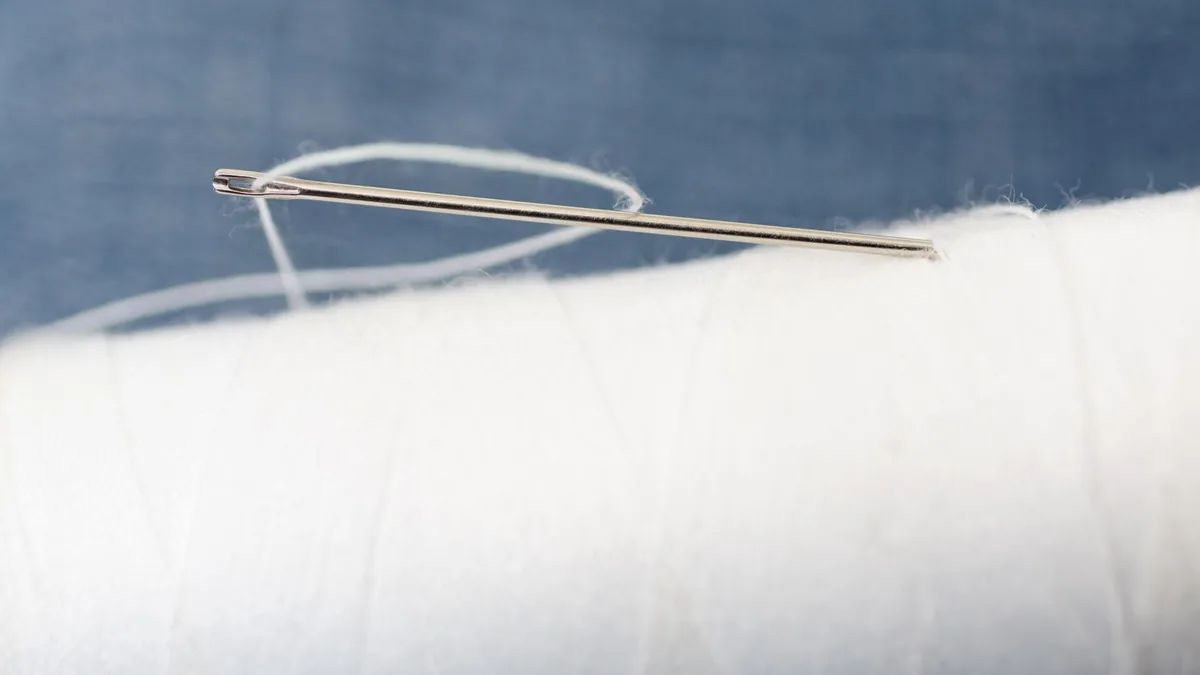
Picture a small tear in a shirt, no wider than a fingernail. Sewn shut with one stitch today, the shirt is saved. Left alone, the tear widens every time the fabric is pulled, until closing it takes nine stitches instead of one, and the shirt may be beyond saving. That is the literal scene behind the proverb, and it is worth holding onto, because the whole lesson lives inside it. One stitch now, or nine later. The saying takes that image of mending cloth and hands it to us as a rule for almost everything we do.
The real meaning has little to do with sewing. Problems, like tears, tend to grow when ignored. A difficulty that is small and cheap to fix today becomes large and costly tomorrow, and the longer we wait, the worse the ratio gets. The proverb is not simply telling us to work hard or to care. It is making a sharper claim: that early action is efficient action, and that delay does not keep a problem the same size but actively multiplies it.
Health shows the pattern most plainly. A tooth with a small cavity can be filled in twenty minutes. Ignored for a year, that cavity reaches the nerve, and the twenty minute filling becomes a root canal, a crown, and several return visits. The problem did not wait politely for us. It spread. The same is true of a strange ache we keep meaning to have checked, or a cough that never quite clears. The body rarely rewards delay, and the earliest version of a problem is almost always the cheapest one to treat.
Schoolwork tells the same story on a shorter clock. An essay assigned four weeks early is a light task if a student writes a paragraph every few days. Left until the final night, it becomes a panic of caffeine and half formed thoughts, and the grade shows it. Nothing about the assignment changed. Only the time left to do it well shrank, and with it every option the student once had. Starting early is the single stitch. The all nighter is the nine.
The idea reaches into things we own, too. A roof with one loose tile is a ten minute repair. Left through a season of rain, the water finds the gap, soaks the timber, and quietly rots a beam that costs thousands to replace. A car makes a faint new noise, and the driver turns up the radio; months later the small worn part has destroyed the expensive parts around it. Maintenance is the art of the early stitch, and people who seem lucky with their houses and cars are often just the ones who listen to small signals.
Relationships work by the same rule, though the tears are harder to see. A small resentment left unspoken does not dissolve. It hardens, colors the next conversation, and gathers company, until what could have been a five minute talk becomes a wall that took years to build and may never fully come down. The single honest sentence said early is the stitch. The long silence is what turns one problem into nine.
What ties these together is a single, slightly uncomfortable truth. The moment a problem is smallest is exactly the moment it is easiest to ignore, because it barely hurts yet. The tiny cavity is painless. The essay is not due for weeks. The noise is faint. So the proverb is really a warning against our own instinct to wait, and its wisdom is that the cost of acting early is almost always smaller than it looks, while the cost of waiting is almost always larger. Nine stitches are not a punishment. They are just what one neglected stitch grows into.
How to Use This Model
Read this to see the pattern, then close it and write your own. Notice the skeleton: literal image, then real meaning, then three or four examples from different areas of life, then a lesson that adds a fresh thought rather than repeating the saying. That skeleton is yours to reuse. The words and examples are not. Swap in a cavity you actually had, a deadline you actually missed, a small argument you wish you had handled sooner. Your teacher has read a hundred essays that just say the proverb five times, and your own concrete examples are exactly what will make yours stand out. Submitting this text would fail an originality check and teach you nothing. Studying how it moves will do the opposite. If the explain-then-prove structure is new to you, the guide to the expository essay lays it out step by step.
Meaning and Origin of A Stitch in Time Saves Nine: Who Said It?
The saying comes from a time when clothes were mended by hand and a torn seam was an ordinary household job, not a reason to buy a new shirt. One stitch placed early held a small tear closed. Left alone, the tear ran, and closing it later took many stitches, or the garment was lost. The proverb simply names that experience and lets it stand for every situation where delay makes repair harder.
The earliest well-known printed version appears in Thomas Fuller’s Gnomologia, a collection of English proverbs published in 1732, where it reads “A stitch in time may save nine.” The “may” dropped out over the years and the saying hardened into a rule. Nine is not a measurement. It was chosen because it sounds right beside “time,” and the point would be the same if it said eight or twelve. What matters is the ratio: a little effort now against a lot of effort later.
Two near relatives are worth knowing, since teachers sometimes ask you to compare them. “Prevention is better than cure” makes the same claim about health. “Time and tide wait for none” is about something else, the fact that time passes whether we act or not; our essay on that proverb shows where the two ideas differ.
A Stitch in Time Saves Nine Story in 300 Words
Story assignments on this proverb want one character, one small problem ignored, one larger consequence, and a moment where the lesson lands. Here is the shape in about 300 words. Study the shape, then invent your own character and problem.
Rohan noticed the loose spoke on his bicycle on a Monday. It made a faint tick against the frame when he rode fast, nothing more. His father, passing in the yard, said the repair shop at the corner would tighten it in five minutes. Rohan nodded and forgot, because the bicycle still rode fine and there was cricket after school.
By Thursday the tick had become a wobble. The loose spoke had let its neighbors slacken, and the wheel no longer ran true. Rohan told himself he would go on Saturday. On Friday, halfway down the slope near the school gate, the rim buckled. He was not badly hurt, only scraped, but the wheel folded like paper and the brake cable snapped when the frame twisted.
At the corner shop the mechanic turned the wrecked wheel in his hands. “Monday, this was a five-minute job,” he said. “Now it’s a new rim, new spokes, a cable, and a week without a bicycle.” Rohan’s father paid, and said nothing, which was worse than a lecture.
Rohan walked to school for seven days. Each morning he passed the slope where the wheel had folded, and each morning the same thought went with him: the tick had been telling him something, and he had turned up the noise of everything else instead. When the bicycle came back, he rode it to the shop the first time he heard any sound he could not explain. The mechanic laughed and tightened a bolt. It took two minutes.
A stitch in time, Rohan thought on the ride home, is only cheap if you are willing to notice the tear.
For a 150-word version, keep the first and last paragraphs, compress the middle into two or three sentences, and cut the dialogue to one line. The narrative essay guide covers how to shape a small incident so the realization carries the ending.
A Stitch in Time Saves Nine Paragraph (About 150 Words)
“A stitch in time saves nine” means that a small problem fixed promptly prevents a much larger one later. The image is a torn shirt: one stitch today, or nine once the tear has spread. The rule applies far beyond sewing. A cavity filled early avoids a root canal. An essay started in the first week avoids an all-night panic in the last. A loose roof tile fixed in ten minutes prevents a rotten beam that costs thousands. In each case the problem does not wait for us; it grows while we look away. The hard part is that small problems are easy to ignore precisely because they do not hurt yet. The proverb warns against that instinct. Acting early costs a little, waiting costs a lot, and the difference between the two is usually the difference between a quick repair and a real loss. Early action is not only wise, it is the cheapest choice available.
For a 200-word version, add one example from your own life and a sentence on why you ignored the warning sign at the time.
A Stitch in Time Saves Nine Speech: Turning the Essay Into a Talk
A speech on the proverb needs the same ideas as the essay but a different opening and a louder ending. Start with the picture, delivered as if the audience can see it: “Imagine a tear in your shirt no wider than your fingernail.” Pause. Then give the rule in one line. Use two examples, not four, because listeners cannot flip back; the cavity and the deadline work, since every student in the room has lived one of them. Close with a direct address: “The tear you are ignoring right now is still one stitch wide. It will not stay that way.” A two-minute speech runs roughly 250 to 300 words, so the short paragraph above, with a spoken opening and a direct close added, is nearly the right length.
Expansion of Idea: Real-Life Examples and Example Sentences
If you need quick real-life examples for an “expansion of idea” or “amplification” exercise, these all follow the one-stitch-versus-nine pattern:
- A small crack in a phone screen that spreads across the whole display within a month.
- A dripping tap that becomes a water bill and a damaged cabinet.
- A missed homework assignment that becomes a gap in understanding before the exam.
- A minor cough that turns into a week in bed because it was never rested.
- A small misunderstanding between friends that grows into a long silence.
- A warning light on a car dashboard ignored until the engine fails.
Example sentences using the proverb correctly:
- My mother fixed the loose button right away, saying a stitch in time saves nine.
- Back up your files tonight; a stitch in time saves nine.
- The doctor’s advice to treat the infection early proved that a stitch in time saves nine.
- He regretted ignoring the leak for months, a reminder that a stitch in time saves nine.
- Start revising now, because a stitch in time saves nine when exams arrive.
For an expansion-of-idea answer, the expected length is usually 100 to 150 words: one sentence on the literal meaning, two on the general rule, two examples, and a closing line on why early action is wise. Trim the short paragraph above to that length by keeping one example instead of three.
What makes this essay work
- A proverb essay earns its length by explaining the idea once and then testing it against real situations, not by rephrasing the saying.
- Open with the literal image, then translate it into the general principle so the reader has both a picture and a rule.
- Use examples from different areas of life so the essay proves the idea is general, not a single lucky case.
- Close on the wider lesson and the cost of ignoring it, so the ending adds meaning instead of repeating the title.
- For a story, speech, or short paragraph on the same proverb, keep the one-stitch-versus-nine shape and change only the format.
Questions
What does 'a stitch in time saves nine' mean?
It means that fixing a small problem promptly prevents a much larger one later. The literal picture is a small tear in cloth: one stitch now, or nine stitches once the tear has spread. The general rule is that delay does not keep a problem the same size; it multiplies it. The hard part is that small problems are easiest to ignore precisely when they barely hurt yet.
Who said 'a stitch in time saves nine,' and where does the proverb come from?
No single author is known. It is an English saying from the age of hand-sewn clothing, when mending was an everyday chore. The earliest well-known printed version appears in Thomas Fuller's 1732 collection Gnomologia as 'A stitch in time may save nine.' The 'may' later dropped out, and the number nine is figurative, chosen for rhythm beside 'time' rather than for arithmetic.
How do I write a 'stitch in time saves nine' story in 300 words?
Use one character, one small problem ignored, one larger consequence, and a moment where the lesson lands. The story on this page follows that shape: a boy notices a loose bicycle spoke on Monday, puts off a five-minute repair, and by Friday the wheel buckles and costs a week without the bike. For 150 words, keep the first and last paragraphs and compress the middle into two or three sentences.
How do I write a paragraph or an expansion of idea on this proverb?
For a 150-word paragraph: one sentence on the literal image, two on the general rule, three short examples from different areas of life, and a closing line on why early action is the cheapest choice. For an expansion of idea or amplification answer of 100 to 150 words, keep one example instead of three. The paragraph on this page is the pattern; replace the examples with your own.
How do I turn the essay into a speech?
Open with the picture delivered as if the audience can see it, pause, then give the rule in one line. Use two examples rather than four, since listeners cannot flip back; the cavity and the deadline work because every student has lived one of them. Close with a direct address about the tear they are ignoring right now. A two-minute speech runs roughly 250 to 300 words.
Can I copy this essay for my own assignment?
No. This is a model to study, not text to submit. Your school runs originality and AI-detection checks, and copied work fails them. Study the moves, then write your own with your own examples: a cavity you actually had, a deadline you actually missed, a small argument you wish you had handled sooner.